Short answer
A daily I-575 commute loads your car with three things: bug protein on the front end, hot iron particles from brake and rail dust embedded in the clear coat and wheels, and a greasy road film over everything. Washing removes the film. It doesn’t remove the other two. A commuter car needs a chemical decontamination, iron remover and clay, roughly twice a year, or the paint stops feeling smooth and starts looking flat.
Why a Woodstock commuter car is a different animal
The shape of life here is specific. You live off Towne Lake Parkway or up near Ridgewalk, and you spend an hour a day on I-575 and I-75 getting into the perimeter and back. That’s thirty or forty highway miles a day at speed, which is a completely different exposure from a car that runs errands around town.
At 70 mph everything that hits your car hits it hard. Bug impacts happen at the front, not on the roof. Brake dust from the car ahead of you arrives while it’s still hot enough to embed. And the constant film of atomised oil, rubber and diesel soot that hangs over any busy interstate settles on your paint every single trip.
These cars are rarely filthy. Owners wash them. They come to us because the paint feels rough and looks dull, and no amount of washing fixes it.
Bug splatter: why it has to come off the same week
Bug remains are protein and acid, and when they bake onto a warm bumper or mirror they behave a lot like bird droppings. They etch. In Georgia the worst of it’s May through September, and the worst of that’s the evening drive, when the air over the Etowah and Little River bottoms is thick with insects.
Two things matter:
- Time. Within a few days is fine. Left for a month over a hot summer, bug residue leaves permanent pitting on the leading edge of the hood and mirrors.
- Method. Never scrub a dry bug. Soak the panel, let a dedicated bug remover dwell, and let the chemistry release it. Scrubbing dried insect shell across paint is the same mistake as dry-wiping pollen. You’re grinding hard debris into clear coat.
A protected front end changes this considerably. On a sealed or coated bumper most of it rinses off. On bare paint it welds on.
Brake dust is the one people underestimate
Brake dust isn’t dust. It’s fine iron filings thrown off the rotor and pad, and it leaves the wheel hot. Those particles land on your wheels and on the lower panels, quarter panels and rear bumper, and while they’re hot they lodge in the surface.
Then they rust in place. That’s what those tiny orange-brown specks are on a light-coloured car: the ones you can feel with a fingertip but can’t see from three feet away. On wheels the same process bonds the dust into the finish until a normal wheel cleaner won’t shift it.
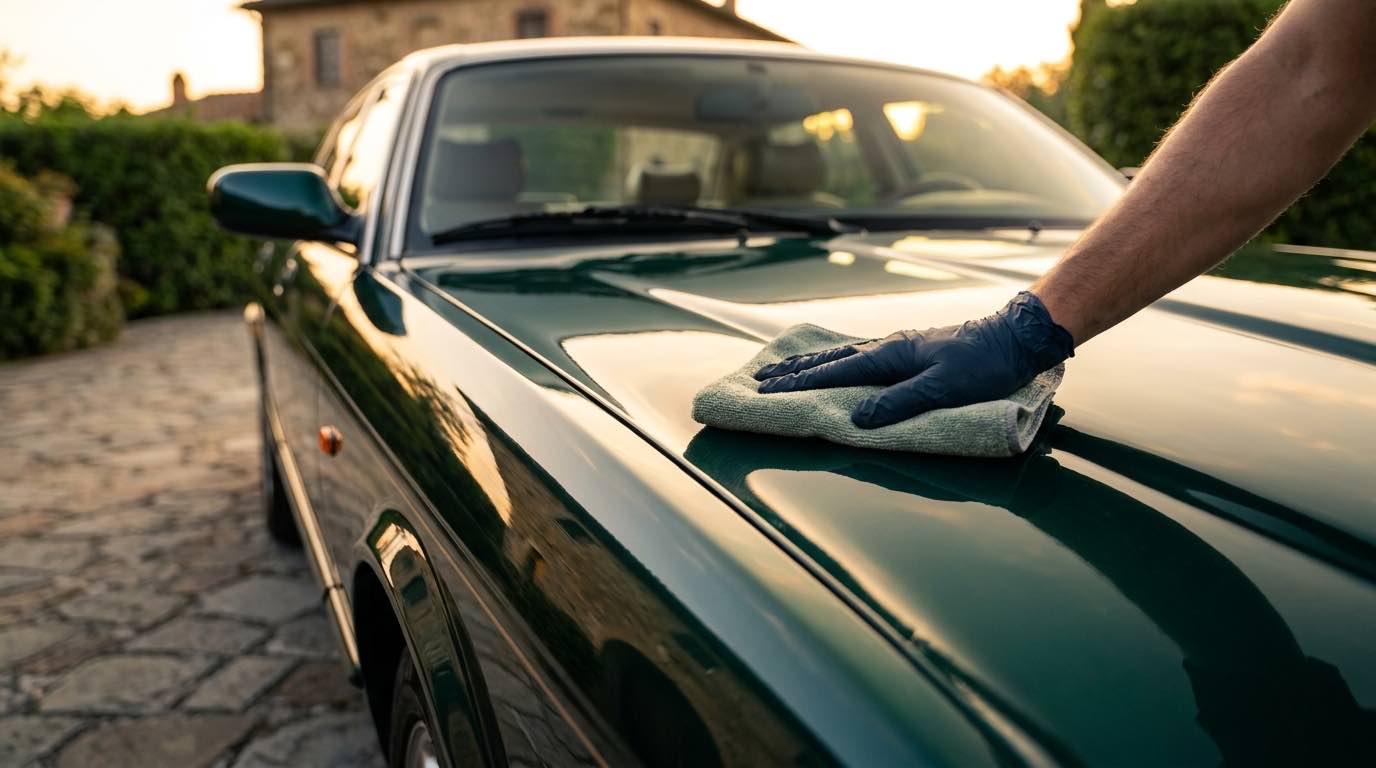
You can prove it on your own car in ten seconds. Wash it, dry it, then put your hand in a thin plastic sandwich bag and run it lightly over the rear quarter panel. The bag amplifies texture. If it feels like fine sandpaper instead of glass, that’s embedded iron and bonded contamination, and it’s on almost every commuter car in Cherokee County.
What actually removes it: chemical decontamination
This is the service most people have never heard of and most commuter cars need. It’s two steps, and it happens after the wash and before any polishing or protection.
- Iron remover. A chemical that reacts with ferrous particles and dissolves them. It’s the one that turns purple as it works, and that colour is the iron being lifted. It gets what is embedded without touching the paint mechanically.
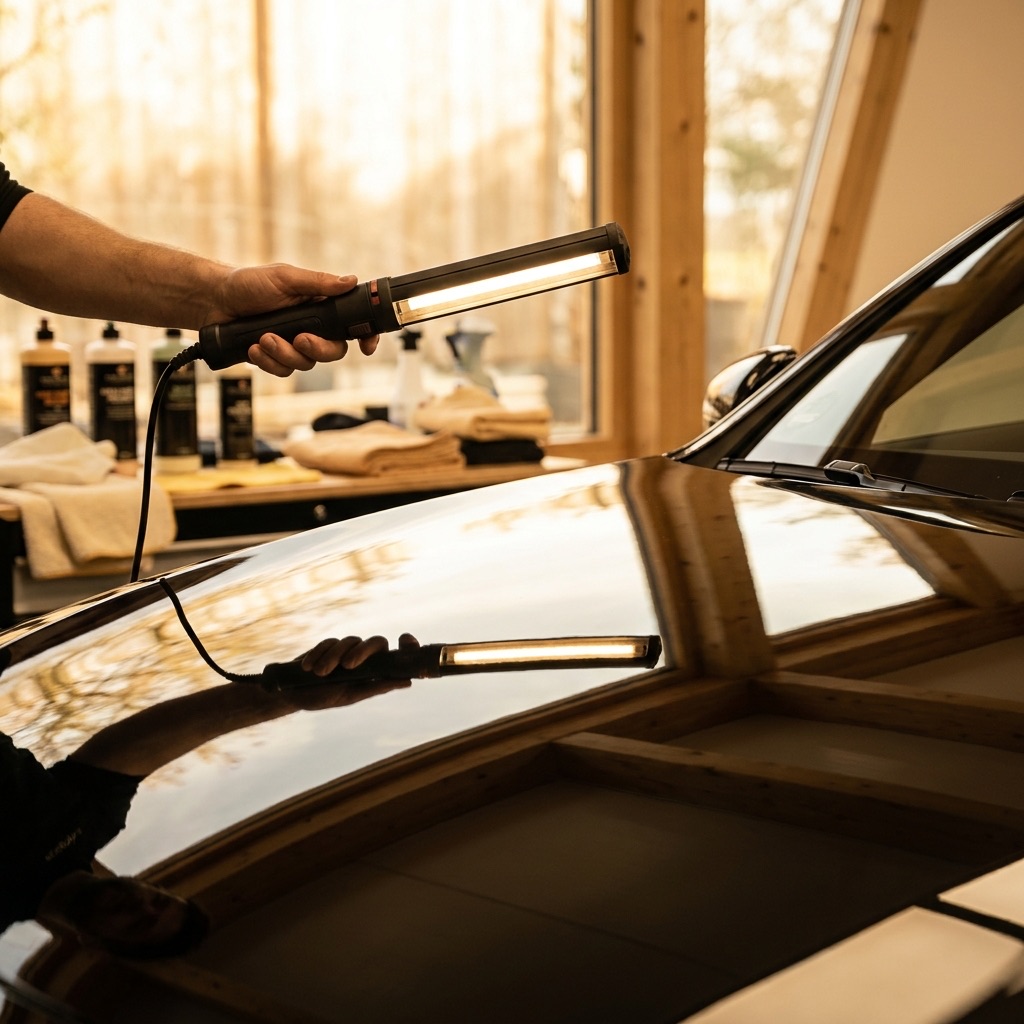
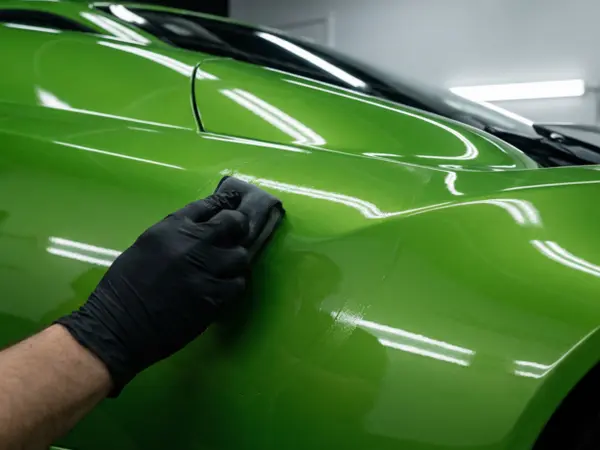
- Clay treatment. A clay bar or mitt glided across a well-lubricated panel, shearing off whatever is still bonded: tar, overspray, rail dust, tree residue. This is what takes the paint from rough to genuinely smooth.
The difference is immediate and physical. Do the sandwich-bag test before and after and it’s not a subtle result. It also matters for everything that comes next: waxing or coating over embedded contamination just seals the contamination in.
How often does a commuter car need this?
| Maintenance wash | Every 2 weeks. Removes road film and fresh bugs before either has time to bond. |
|---|---|
| Bug removal, front end | Within a week in summer. Sooner on a dark car. |
| Full decontamination (iron + clay) | Twice a year. Spring, after pollen; and autumn, after bug season. |
| Protection topped up | Every decontamination. Bare paint after claying must be sealed the same day. |
| Paint correction | Only as needed, when there’s visible swirling or etching that a polish is required to remove. |
The wheels deserve their own answer
Wheels take the worst of it and get the least attention. Left alone, bonded brake dust will permanently pit a clear-coated alloy, and once that finish is compromised the wheel corrodes from the inside of the pit outward. Refinishing a set of wheels costs far more than keeping them decontaminated.
If you do one thing differently after reading this: stop cleaning your wheels last with the same mitt you used on the paint. Wheels get their own tools, always.
We work around a commute, not against it
Being mobile is the entire point for this kind of customer. We come to your house in Towne Lake before you leave, or to your office lot while you’re in it, and we bring our own water and power. You don’t spend a Saturday sitting in a waiting room to fix a problem the commute created.
BlackLine Detail Company covers Woodstock and the rest of Cherokee County by appointment. If the paint on your car feels rough, that’s the call to make.